

Ube vs purple sweet potato what is the difference?
If you have ever browsed a grocery store or scrolled through a food blog, you have probably noticed the stunning purple hues taking over everything from lattes to layer cakes. But here is a question that confuses even seasoned home cooks and professional bakers: is ube the same as purple sweet potato?
Before you get started, you can now explore our full range of UBE products available across Canada by clicking here.

The short answer is no, and the difference matters more than you might think. Whether you are looking to recreate authentic Filipino desserts, elevate your baked goods, or simply add a vibrant, nutritious ingredient to your pantry, understanding the distinction between these two remarkable purple roots will transform the way you cook and bake.
In this article, we break down everything you need to know about ube versus purple sweet potato, so you can make informed choices and get the most out of every recipe. 🌿

What Is Ube? Understanding This Filipino Superfood
Ube (pronounced oo-beh) is a purple yam native to the Philippines. Its scientific name is Dioscorea alata, and it belongs to the yam family, which makes it botanically distinct from sweet potatoes altogether.
For centuries, ube has been a cornerstone of Filipino cuisine and culture. You will find it in classic desserts like halo-halo, ube halaya (a rich purple jam), ube ice cream, and pandesal. Its appeal goes far beyond aesthetics: ube offers a uniquely sweet, vanilla-like flavour with subtle earthy and nutty undertones that no other ingredient can truly replicate.
The Appearance and Flavour Profile of Ube
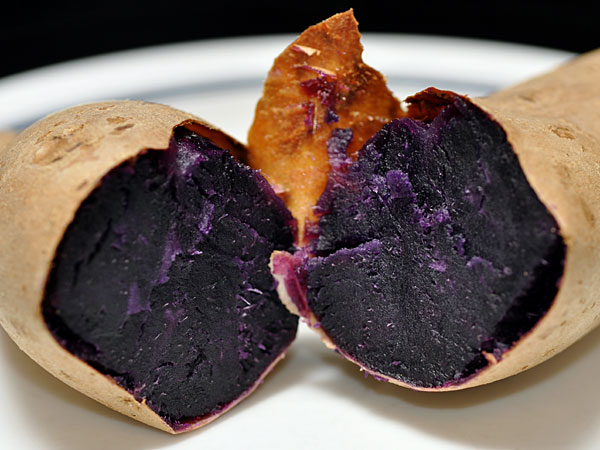
When you look at a fresh ube yam, you will notice its rough, dark brown exterior, which hides a brilliantly vivid purple flesh inside. Once cooked, this flesh deepens into an intense violet-purple that holds remarkably well through baking, steaming, or blending.
In terms of flavour, ube is often described as mildly sweet with hints of vanilla and coconut. It is much more subtle and complex than a regular sweet potato, which makes it perfect for both sweet and savoury applications. When you use high-quality ube powder, you capture that authentic flavour profile in a convenient, ready-to-use format. ✨
What Is Purple Sweet Potato? A Different Root Entirely
Purple sweet potato (Ipomoea batatas) belongs to the morning glory family, which is a completely separate botanical genus from ube. There are several varieties of purple sweet potato, the most well-known being the Okinawan sweet potato (popular in Japan and Hawaii) and the Stokes Purple sweet potato (developed in the United States).
| Discover our Bamboo Whisk for Ube |

While purple sweet potatoes are absolutely delicious and nutritious in their own right, they have a distinctly different character from ube, and substituting one for the other will noticeably change the outcome of your recipe.
The Appearance and Flavour Profile of Purple Sweet Potato
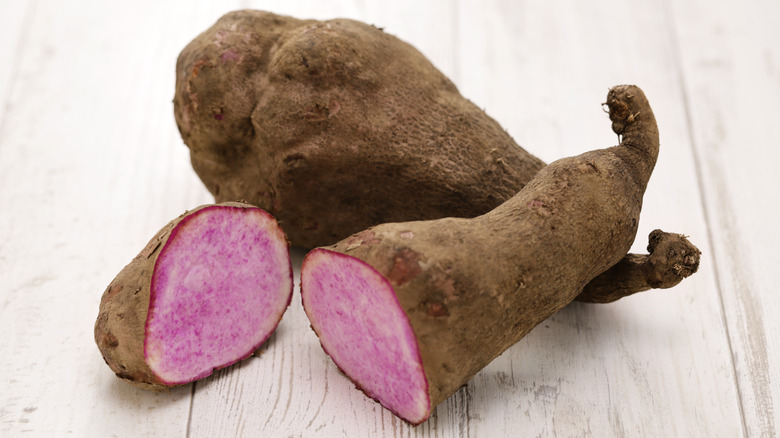
Purple sweet potatoes typically have a pale or reddish-tan skin, and their flesh ranges from light lavender to deep violet depending on the variety. However, when compared to ube, their colour tends to be less intense and may fade more significantly during cooking.
Flavour-wise, purple sweet potatoes taste much more like a conventional sweet potato: starchy, slightly earthy, and moderately sweet. They lack the nuanced vanilla and coconut notes that make ube so distinctive and sought-after in fine baking and dessert-making.
Ube vs Purple Sweet Potato: A Side-by-Side Comparison 🔍
Understanding the differences becomes much easier when you see them laid out clearly. Here is what sets these two purple ingredients apart across the most important categories.
Botanical Origins
Ube is a true yam (Dioscorea alata) originating from the Philippines and Southeast Asia. Purple sweet potato is a variety of sweet potato (Ipomoea batatas) cultivated across Asia, the United States, and parts of Europe. Despite their similar colour, they are no more closely related than an apple and a pear.
Colour Intensity
One of the most practical differences between ube and purple sweet potato is the vibrancy and stability of their colour. Ube is prized by pastry chefs and food artisans precisely because its deep violet pigment remains bold and vivid after cooking, baking, or freezing. Purple sweet potato, while beautiful in its raw state, tends to produce a softer, less saturated purple once heat is applied.
If you are aiming for that show-stopping, Instagram-worthy purple in your cakes, cookies, cheesecakes, or breads, ube powder is the professional choice. 💜
Flavour and Aroma
This is perhaps the most important distinction for anyone serious about cooking and baking:
Ube delivers a complex, gently sweet flavour profile with unmistakable vanilla, coconut, and nutty undertones. It is aromatic, distinctive, and pairs beautifully with dairy, chocolate, citrus, and tropical fruits.
Purple sweet potato offers a more straightforward starchy sweetness. It is hearty and satisfying but lacks the depth and aromatics that make ube so special in desserts and confections.
Culinary Uses
Ube shines brightest in desserts, pastries, beverages, and confections. Think ube latte, ube cheesecake, ube brioche, ube truffles, and ube ice cream. It also works beautifully in savoury applications like bread and pasta.
Purple sweet potato is versatile too, performing well in soups, roasted dishes, fries, and mashed preparations. However, it does not deliver the same complexity that ube brings to fine baking.
Nutritional Profile
Both ube and purple sweet potato are rich in anthocyanins, the powerful antioxidant compounds responsible for their purple pigmentation. Anthocyanins have been studied for their potential role in supporting cardiovascular health, reducing oxidative stress, and promoting overall wellbeing.
Ube is also a good source of complex carbohydrates, dietary fibre, vitamin C, and potassium. Purple sweet potatoes share a similarly impressive nutritional profile, with strong antioxidant capacity and a good supply of vitamins A, C, and B6.
Both roots are naturally gluten-free, making them excellent choices for those following a gluten-free lifestyle. 🌱
Why Ube Powder Is the Smart Choice for Home Cooks and Bakers
If you have ever tried to source fresh ube in Canada, you know how challenging it can be. Fresh ube yams have a very short shelf life, are rarely available outside of specialty Asian grocery stores, and require significant preparation before use.
This is precisely why ube powder has become the ingredient of choice for culinary enthusiasts across Canada and beyond. High-quality ube powder offers several compelling advantages that make it superior to working with fresh ube in most home and professional kitchen settings.
| Discover our Organic Ube Powder 200g (7oz) |

Convenience Without Compromise
With ube powder, you skip the peeling, boiling, and mashing. You simply measure, mix, and create. The powder reconstitutes beautifully in recipes, integrating seamlessly into batters, doughs, frostings, beverages, and sauces. You get the authentic ube experience in a fraction of the time.
Consistent Quality and Colour Every Time
One of the great frustrations of working with fresh produce is variability. The colour, flavour, and moisture content of fresh ube can vary significantly depending on the season, origin, and handling. Ube powder, produced from carefully selected and processed ube yams, delivers consistent results batch after batch. Your ube cake will look and taste the same every single time. 🎂
Longer Shelf Life
Fresh ube must be used quickly before it deteriorates. Ube powder, stored properly in a cool, dry place, maintains its quality, colour, and flavour for an extended period, making it a practical, economical choice for both occasional bakers and frequent culinary creators.
Versatility in the Kitchen
Ube powder dissolves easily into liquids, blends into dry ingredient mixes, and incorporates beautifully into fat-based preparations like buttercreams and ganaches. From your morning smoothie to an elaborate celebration cake, ube powder adapts to your creative vision without compromise.
How to Use Ube Powder in Your Recipes 🍰
Getting started with ube powder is simple, and the results are truly remarkable. Here are a few ideas to inspire your next creation:
Ube latte: Whisk one to two tablespoons of ube powder into warm milk (dairy or plant-based) with a touch of sweetener for a stunning and aromatic purple drink that will elevate your morning routine.
Ube cheesecake: Incorporate ube powder into your cream cheese filling for a vibrant, conversation-starting dessert with a deeply satisfying flavour.
Ube bread and rolls: Add ube powder to your favourite bread dough for a soft, pillowy, and gorgeous purple loaf that tastes as incredible as it looks.
Ube ice cream: Blend ube powder into your ice cream base for an authentic Filipino-inspired frozen dessert that is both visually spectacular and deliciously unique.
Ube frosting: Mix ube powder into a classic buttercream for a naturally coloured, flavour-forward frosting that pairs beautifully with vanilla, coconut, or white chocolate cake.
The possibilities are truly endless when you have premium ube powder in your pantry. 🌟
Frequently Asked Questions About Ube and Purple Sweet Potato
Can I substitute purple sweet potato for ube in recipes?
Technically yes, but the results will be noticeably different. You will lose the distinctive vanilla-coconut flavour of ube, and the colour will likely be less vibrant. For authentic Filipino-inspired recipes, ube powder is the recommended choice.
Is ube powder natural?
Yes. High-quality ube powder is made from real ube yams that have been cooked, dehydrated, and ground into a fine powder. No artificial colours or flavours are required to achieve that stunning purple.
Is ube powder gluten-free?
Pure ube powder is naturally gluten-free, making it a wonderful ingredient for those managing celiac disease or gluten sensitivity. Always verify the label on the specific product you purchase to ensure there is no cross-contamination from processing.
Where can I buy ube powder in Canada?
Finding quality ube powder in Canada used to be a challenge. Today, you can conveniently order premium ube powder directly from our online store and have it delivered right to your door, anywhere in Canada. 🇨🇦
Make the Authentic Choice: Discover Our Premium Ube Powder
Now that you know the true difference between ube and purple sweet potato, the choice is clear. If you want the real, authentic, deeply flavourful, and brilliantly coloured purple ingredient that has captivated food lovers across the Philippines and the world, ube powder is your answer.
| Discover our Ube Lover Kit - Organic Ube® |

Our carefully sourced ube powder brings you the genuine taste and colour of real Filipino ube yam, in a convenient, consistent, and shelf-stable format designed for the modern Canadian kitchen. Whether you are a passionate home baker, a dedicated food content creator, or a professional pastry chef, our ube powder will become one of your most treasured pantry staples.
Your Favourite UBE Products Are Here
If you’d like to learn even more about this incredible superfood, we invite you to explore the rest of our website dedicated to premium UBE products available across Canada. You can browse our organic ube powder collection to discover our best-selling items, and explore our different accessory collections for even more options.
Whether you’re looking for recipes, health benefits, or high-quality UBE ingredients, you’ll find everything you need right here and at www.organic-ube-canada.ca


